Down to Earth
Brown is the most grounded color there is, literally. It's soil, timber, leather, and coffee; the color of things that are sturdy, natural, and built to last. A brown background gives a design instant warmth and honesty, which is why it shows up everywhere from coffee-shop branding to heritage labels. Below: ready-to-download brown backgrounds, the shades and codes to build your own, and the story behind the color.
Brown color codes
Gallery
A sample of ready-to-use brown backgrounds. Hover any image and hit the download button to grab the full-resolution version.




Ways to use a brown background
- Wallpaper: a warm brown wallpaper makes a desktop or phone feel calm and cozy; every image above downloads at full resolution.
- Plain & solid: the natural backdrop for product shots of anything organic (coffee, leather, crafts, food); grab an exact shade below.
- Web & design: brown signals artisanal and authentic. It's the house color of coffee roasters, tanneries, and anyone selling things made by hand.
Shades of brown
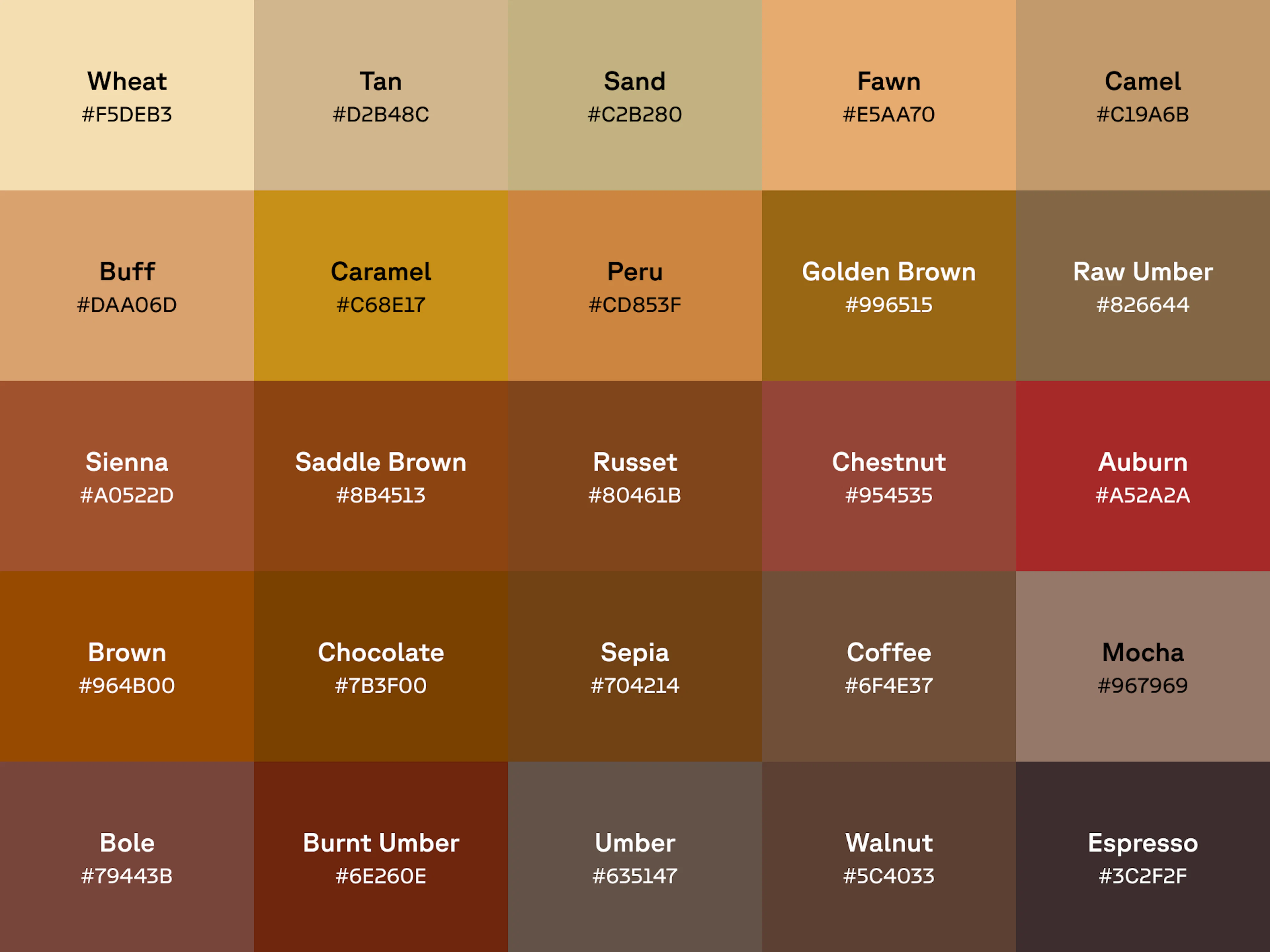
Brown runs from nearly-neutral to nearly-black. On the light end sit wheat, tan, and camel, soft desert tones that behave like warm grays. The middle belongs to caramel, sienna, and saddle brown: the classic leather-and-wood browns. Go darker and you're into coffee territory: sepia, walnut, and espresso.
Click a shade to copy its hex code, or download it as a ready-to-use background:
Brown has a secret: it isn't really its own color. It's what orange looks like at low brightness, a dark muted orange your eye reads as something else entirely. That's why brown palettes feel so warm. Underneath, they're all embers.
Brown gradient backgrounds
A brown gradient reads like wood grain or a well-pulled espresso: depth without noise. Here are six ready-made brown gradients. Copy the CSS straight into a stylesheet, or download the full-resolution image. Want to build your own? Open CSS Gradient and roll a custom brown.
What brown means
Brown doesn't shout, and that's the point. It's the color of reliability, comfort, and things that don't need to impress you.
Reliable, rugged, and real
Brown reads as dependable. It's the color of workwear jackets, hiking boots, and shipping boxes; UPS built an entire brand on it and even trademarked the shade, asking "What can brown do for you?" In design, brown grounds a palette the way a wood floor grounds a room: everything sitting on it feels more solid.
Cultural significance of the color brown
Brown is the color of harvest and soil, and cultures that farm have always treated it with respect: fertility, humility, and home ground. Franciscan monks chose rough brown robes precisely for that humility, a deliberate step away from luxury. In the modern world brown became the color of craft: coffee culture, kraft paper, unbleached everything. It's the visual shorthand for "made honestly."
History of brown
Brown is where painting began. The umbers, siennas, and ochres, earth pigments dug straight from the ground, are the oldest colors in art, covering the cave walls of Lascaux some 17,000 years ago. The names remember their homes: umber from Umbria, sienna from Siena, both still on paint tubes today.
Later browns got stranger. Sepia came from cuttlefish ink; Leonardo drew with it. Van Dyck brown, a favorite of the Flemish master, was essentially refined peat. And the most notorious brown in art history, mummy brown, was made by grinding up actual Egyptian mummies. Painters loved its rich glaze until the 19th century, when supplies mercifully ran out.
Colophon
While Cool Backgrounds is a fine resource for generating images from popular javascript libraries, the real heavy lifting comes from the library authors themselves. When it comes to customer support, Quinn Rohlf from Trianglify.js is incredibly responsive and a really smart guy to boot. Particle.js is developed by Marc Brüderlin with a wonderful API and is being actively maintained. Gradient Topography is a newly minted project by me as a response to the amazing work by the Codrops crew. And of course Unsplash is one of the best internet treasures of all time, built by the former Crew team as a side project.
Oh yea and can’t forget CSS Gradient and Rellax.js which is the “cool background” that powers those sliding parallax shapes in the content section of this site!